
Convergent synthesis
A strategy to improve efficiency in multistep organic synthesis.

en:User:V8rik · CC BY-SA 3.0
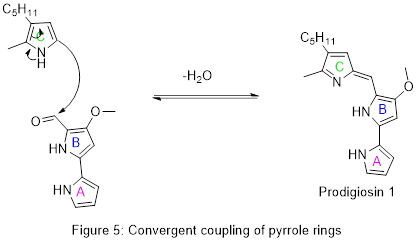
Convergent synthesis is a strategy in chemistry, particularly organic synthesis, designed to improve the efficiency of multistep synthesis. In this approach, several individual pieces of a complex molecule are synthesized separately in a first stage, then combined in a second stage to form the final product. This contrasts with linear synthesis, where the overall yield drops quickly with each reaction step.
- field
- Chemistry
- known_for
- Improving efficiency of multistep synthesis through fragment coupling and independent synthesis
Lore & Background
Convergent synthesis is a strategy that aims to improve the efficiency of multistep synthesis, most often in organic synthesis. In this type of synthesis, several individual pieces of a complex molecule are synthesized in stage one, and then in stage two these pieces are combined to form the final product. In linear synthesis, the overall yield quickly drops with each reaction step; for example, if the yield is 50% for each reaction, the overall yield of D is only 12.5% from A. In a convergent synthesis, the overall yield of E (25%) looks much better.
Reader's Guide
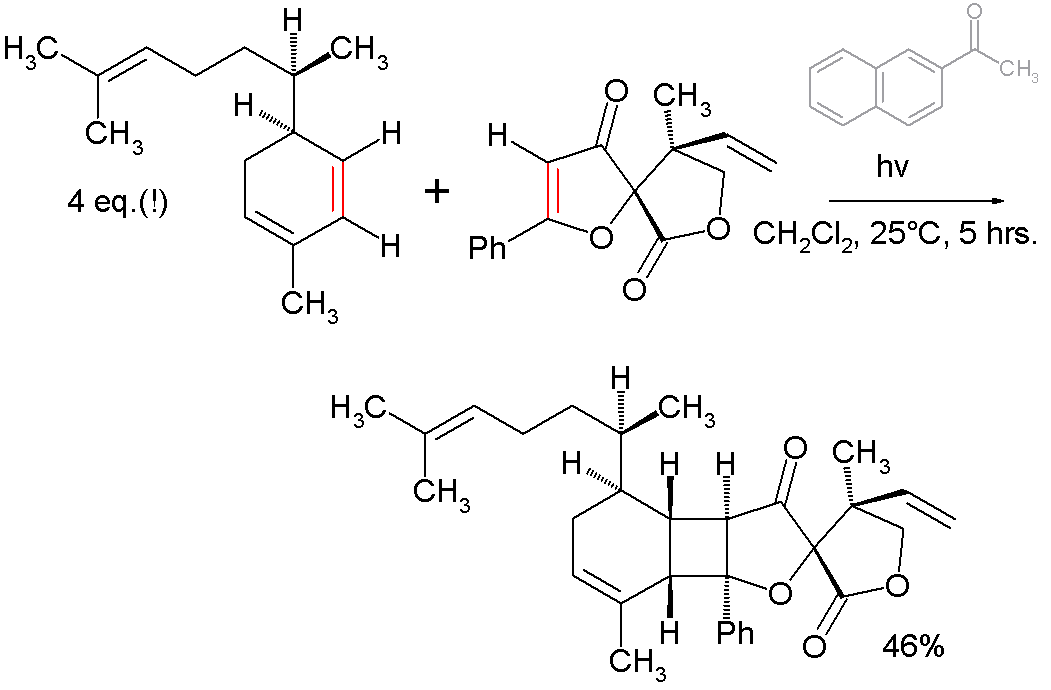
Convergent synthesis is applied in the synthesis of complex molecules and involves fragment coupling and independent synthesis. This technique is more useful if the compound is large and symmetric, where at least two aspects of the molecule can be formed separately and still come together. An example of its use in total synthesis is the final step (photochemical [2+2]cycloaddition) towards the compound biyouyanagin A. The strategy's significance lies in its ability to achieve higher overall yields compared to linear synthesis, making it a valuable tool for constructing complex molecules efficiently.
Did You Know?
- In a convergent synthesis, several individual pieces of a complex molecule are synthesized in stage one, then combined in stage two.
- With 50% yield per step, a linear synthesis gives an overall yield of 12.5% from A to D, while a convergent synthesis gives 25% for E.
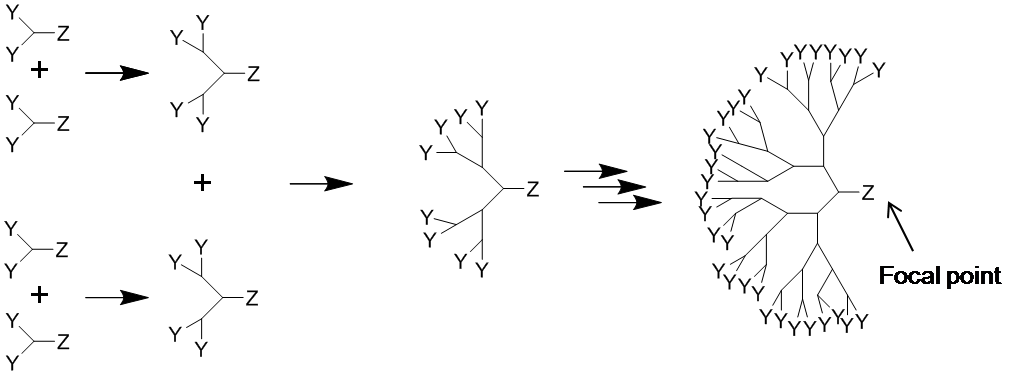
- Convergent synthesis is encountered in dendrimer synthesis where branches are connected to the central core.
Origins and the Race to Define a Coupling
The Stille reaction did not emerge from a single eureka moment but from a rapid succession of contributions in the mid-to-late 1970s. Colin Eaborn's 1976 report marked the first documented palladium-catalyzed coupling between aryl halides and organotin reagents, though yields of the resulting diaryl products hovered between a modest 7 percent and a respectable 53 percent. The following year, Toshihiko Migita pushed the scope forward by demonstrating that acyl chlorides could be joined to alkyl-tin reagents, delivering ketones in 53 to 87 percent yields. Migita also explored allyl-tin partners with both aryl and acyl halides, noting that the allyl group's superior ability to migrate onto the palladium center allowed reactions to proceed at lower temperatures, with aryl yields spanning 4 to 100 percent. John Kenneth Stille then entered the picture in 1978, reporting couplings of diverse alkyl tin reagents with aryl and acyl halides under notably mild conditions and achieving yields of 76 to 99 percent. Throughout the 1980s he extended the chemistry to ketone synthesis and worked out a mechanistic picture. Because of these layered contributions, the transformation is occasionally referred to as the Migita–Kosugi–Stille coupling.
The Catalytic Cycle and Its Subtleties
At its core, the Stille coupling follows a three-step catalytic cycle: oxidative addition of an organic halide or pseudohalide to a palladium center, transmetallation transferring the organic group from tin to palladium, and reductive elimination releasing the new carbon–carbon bond while regenerating the catalyst. The active species is widely believed to be a 14-electron Pd(0) complex, accessible through ligand dissociation from precursors like Pd(PPh3)4 or Pd(dba)2, by adding phosphines to ligandless palladium(0), or by reducing a Pd(II) salt in the presence of phosphines or the organotin reagent itself. Oxidative addition converts the 14-electron species into a 16-electron Pd(II) intermediate, a step that anionic ligands such as acetate can accelerate by rendering the palladium more nucleophilic. With sp3-hybridized organohalides, an SN2-type pathway can occasionally take over. Although oxidative addition typically yields a cis-arranged intermediate, bulky phosphine ligands make that geometry energetically costly, driving rapid isomerization to the trans form. This preference is sometimes rationalized through the sdn model and trans-effect arguments: the carbon donor ligand competes more aggressively for palladium's orbital than the more electronegative halide, making the trans arrangement thermodynamically favored.
Reagent Handling and the Toxicity Trade-off
One of the Stille reaction's most practical advantages lies in the behavior of its organostannane partners. Unlike many organometallic reagents that demand rigorously anhydrous and oxygen-free conditions, these tin compounds are stable to both air and moisture, which simplifies their handling in a typical laboratory. Many of the required reagents are available directly from commercial suppliers, and those that are not can be prepared following well-established literature procedures. On the electrophilic side, the leaving group X is most often a halide—chlorine, bromine, or iodine—but the reaction also accommodates pseudohalides such as triflates, sulfonates, and phosphates, broadening the range of accessible starting materials. The reaction sits within the larger family of palladium-catalyzed cross-couplings, and several comprehensive reviews have been published to guide practitioners. The principal drawback, however, is toxicity: organotin compounds are highly toxic, a fact that casts a long shadow over an otherwise convenient reagent class while the Stille coupling remains a workhorse in synthetic organic chemistry.
From Alkyl Pioneers to a Broad Synthetic Toolbox
The early literature on tin-mediated palladium couplings concentrated on alkyl groups, but the field quickly outgrew that narrow focus. By the mid-1980s, more than 65 papers had appeared exploring the substrate scope of reactions involving organotin reagents, and the center of gravity shifted decisively toward vinyl, alkenyl, aryl, and allyl organostannanes coupled to a variety of halides. These unsaturated and aromatic partners proved far more synthetically useful for assembling complex molecular frameworks. The combination of air and moisture stability, straightforward preparation, and reliable palladium catalysis made the Stille reaction a common fixture in organic synthesis laboratories. Stille's own 1980s work, which applied the mild coupling to the preparation of numerous ketones and laid out a coherent mechanistic picture, helped cement the method's credibility. The reaction's place among the broader constellation of palladium-catalyzed cross-couplings—each with its own strengths and limitations—ensured that it became one of the most frequently deployed carbon–carbon bond-forming tools available to synthetic chemists.
Gallery

Frequently Asked Questions
What is convergent synthesis?
Convergent synthesis is a strategy in organic chemistry where multiple fragments of a target molecule are built independently and then joined together in a final coupling step. It is designed to make multistep syntheses far more efficient than threading one long chain of reactions from start to finish.
How does convergent synthesis differ from linear synthesis?
In linear synthesis, every step depends on the previous one, so the overall yield compounds downward with each additional reaction. Convergent synthesis sidesteps this by parallelizing the work—several pieces are made simultaneously and linked only at the end, preserving more material through the process.
Why is convergent synthesis important to organic chemists?
It dramatically improves the practical yield of complex molecule construction, which matters enormously when synthesizing pharmaceuticals or natural products where starting material is scarce. By shortening the longest linear sequence any single fragment must survive, it makes ambitious targets far more achievable in the lab.
How does convergent synthesis actually work in the lab?
Chemists first synthesize two or more separate molecular fragments through their own independent reaction sequences. In a second stage, those fragments are coupled—often through a key bond-forming reaction—to assemble the final target molecule.
What is the main advantage of convergent synthesis over other strategies?
Its core strength is that the overall yield no longer collapses exponentially with each added step, because the longest linear sequence is deliberately shortened. This makes it the go-to approach whenever a target molecule can be logically divided into independently preparable pieces.
More in Organic Chemistry And Reaction Mechanisms 1-22
Spotted an error? Know more?
This is a living reference — every entry is fact-audited, and reader corrections feed straight into our audit queue. Suggest an edit · See this site's audit record