
Cahn–Ingold–Prelog priority rules
Standard process for naming stereoisomers of organic molecules.

T.vanschaik · CC BY-SA 4.0
The Cahn–Ingold–Prelog (CIP) sequence rules, named after Robert Sidney Cahn, Christopher Kelk Ingold, and Vladimir Prelog, are a standard process in organic chemistry for completely and unequivocally naming a stereoisomer of a molecule. The purpose of the CIP system is to assign an R or S descriptor to each stereocenter and an E or Z descriptor to each double bond, enabling the configuration of the entire molecule to be specified uniquely by including the descriptors in its systematic name.
- field
- Organic chemistry
- known_for
- CIP sequence rules for stereoisomer nomenclature
Lore & Background
The IUPAC presentation constitutes the official, formal standard for their use, noting that the method has been developed to cover all compounds with ligancy up to 4 and extended to ligancy 6, as well as for all configurations and conformations of such compounds.
Reader's Guide
The CIP sequence rules are central to organic chemistry because they provide a systematic method for assigning R/S and E/Z descriptors to stereocenters and double bonds, respectively, allowing every stereoisomer of an organic molecule to be named uniquely. The process involves identifying stereocenters and double bonds, assigning priorities to attached groups based on atomic number and recursive comparison, and then applying the R/S or E/Z designation. The rules cover molecules with ligancy up to 4 and also ligancy 6. A recent paper argues for changes to rules 1b and 2 to address certain molecules with unclear descriptors, but a different problem remains: in rare cases, two different stereoisomers of the same molecule can have the same CIP descriptors, so the CIP system may not be able to unambiguously name a stereoisomer, and other systems may be preferable. Despite this limitation, the CIP system remains the official IUPAC standard for stereochemical nomenclature.
Did You Know?
- A molecule with n stereocenters can have up to 2^n stereoisomers, but the actual number of diastereomers depends on structure and symmetry, with fewer possible due to meso compounds.
- The CIP rules assign R (rectus, Latin for 'right') for clockwise rotation and S (sinister, Latin for 'left') for counterclockwise rotation when the lowest priority group is oriented away from the observer.
- If two substituents differ only in isotopes, the larger atomic mass is used to set priority.
- In rare cases where two substituents differ only in absolute configuration (R or S), the priority rule does not change the uppercase R/S descriptor; lowercase r and s are used only for pseudo-asymmetric centers.
From a 1966 Article to a Global Standard
The Cahn–Ingold–Prelog system traces its formal birth to a 1966 article authored by Robert Sidney Cahn, Christopher Kelk Ingold, and Vladimir Prelog. That single publication laid out the sequence rules that would become the backbone of stereochemical nomenclature. For roughly eight years the rules circulated as a community convention before the International Union of Pure and Applied Chemistry formally absorbed them into its official nomenclature framework in 1974. Since that adoption, IUPAC has periodically revised the rules, with the most recent update appearing in the 2013 edition of Nomenclature of Organic Chemistry. The IUPAC presentation explicitly states that the method was developed to cover compounds with ligancy up to four and extended to ligancy six, encompassing all configurations and conformations of such compounds. Yet the official documentation itself carries a pointed warning: anyone tackling anything beyond fairly simple structures should consult the original 1966 paper first. That caveat underscores how, even after nearly six decades of refinement, the system retains a depth that no single summary can fully capture.
The Recursive Heart: Ranking Substituents Bond by Bond
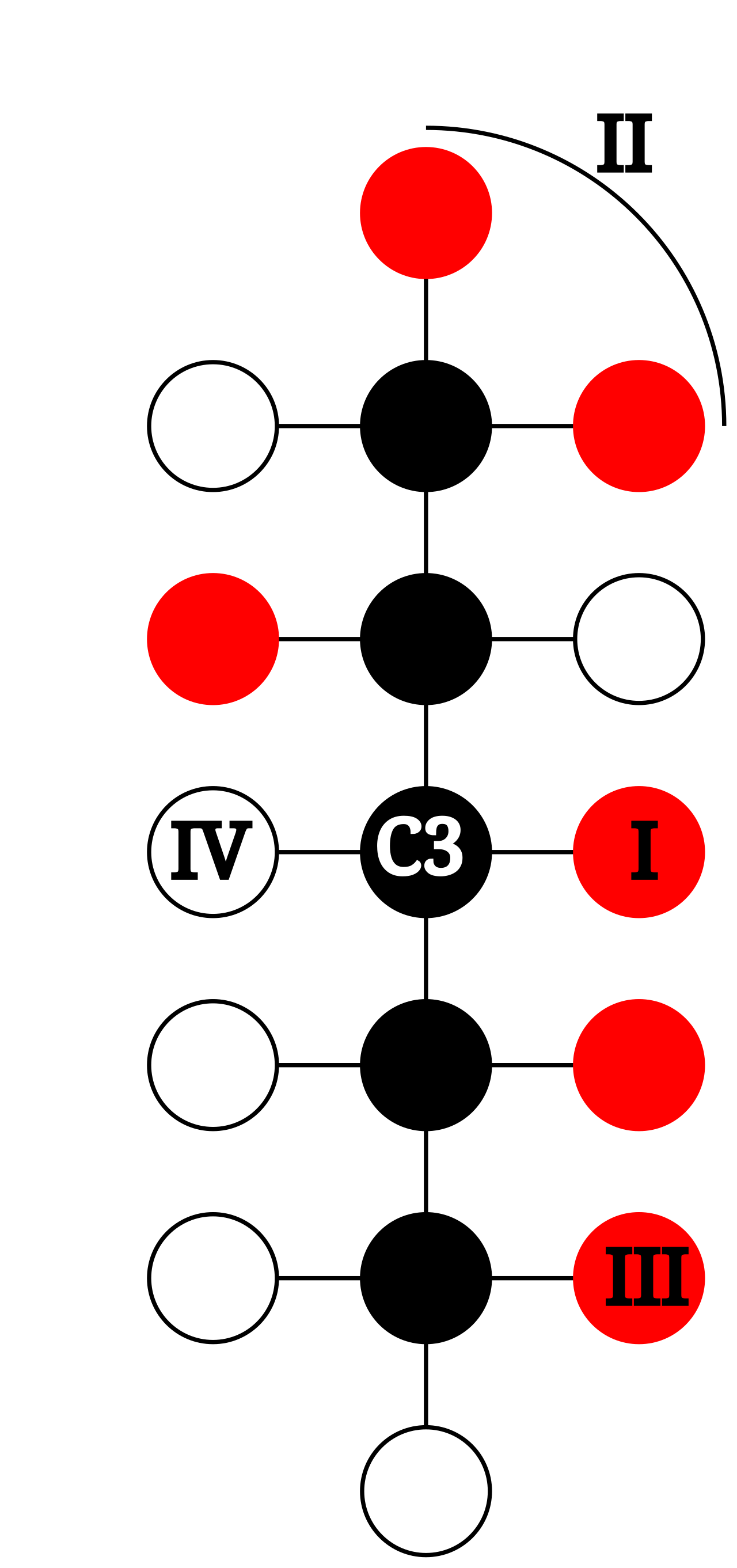
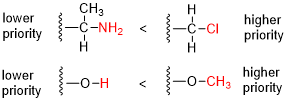
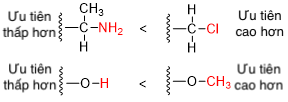
At the center of the CIP system lies a deceptively simple yet endlessly recursive procedure for ranking the groups attached to a stereocenter or double-bonded atom. The first comparison is straightforward: examine the atomic number of each atom directly bonded to the center, and the higher number claims the top rank. When a tie appears, the procedure reaches one bond farther out, compiling a list of the next atoms for each competing group, sorting each list in descending order of atomic number, and comparing entry by entry until the first difference breaks the tie. If the tie persists, every atom in those lists is itself expanded into a sublist of its own neighbors, the sublists are sorted, and the comparison resumes. This expansion repeats bond by bond, peeling outward through the molecular skeleton, until a distinction finally emerges. The elegance of the scheme is that it reduces the three-dimensional question of spatial arrangement to a purely combinatorial, stepwise ranking that can be applied uniformly whether the molecule has one stereocenter or dozens.
Taming the Unusual: Isotopes, Phantom Atoms, and Rings
Several special conventions extend the basic atomic-number comparison to cases that would otherwise stump the system. When two substituents differ only by isotope, the heavier isotope claims the higher rank. Double and triple bonds are handled through a phantom-atom trick: an atom double-bonded to a partner is treated as if it were bonded to that partner twice, and a triple bond generates two phantom copies for each side, always excluding the atom one just came from to avoid doubling back along the same bond. Geometric isomers receive their own rule: a Z-configured substituent outranks its E counterpart when the two are otherwise identical. Cyclic structures demand the most elaborate treatment. The ring must be unwound into a finite tree, called a hierarchical digraph, by walking every possible path from the stereocenter. Whenever a path loops back onto an atom already visited, a phantom atom is inserted to keep the tree acyclic, so a single real atom can appear in multiple positions within the expanded structure.
Limits, Debates, and the Combinatorial Burden
Despite its near-universal adoption, the CIP system is not without acknowledged weaknesses. A recent publication has argued that sequence rules 1b and 2 should be revised because, for certain molecular architectures, the descriptors they produce remain ambiguous. A separate and rarer problem persists: in exceptional cases two genuinely different stereoisomers of the same compound can end up carrying identical CIP descriptors, meaning the system simply cannot distinguish them and another nomenclature approach may be preferable. The combinatorial stakes are enormous. A molecule bearing n stereocenters typically gives rise to 2^n distinct stereoisomers, of which 2^n − 1 are diastereomers each paired with an enantiomer. Every one of those configurations must be named unambiguously, and the CIP rules bear that responsibility for essentially every organic compound whose atoms carry a ligancy below four, or up to six in the extended framework. The sheer scale of that mandate is a reminder of how much chemical communication rests on a set of rules first sketched in a single 1966 paper.
Gallery
Frequently Asked Questions
Who is Cahn–Ingold–Prelog priority rules?
The Cahn–Ingold–Prelog sequence rules are named after three chemists — Robert Sidney Cahn, Christopher Kelk Ingold, and Vladimir Prelog — who developed the system. They serve as the standard method in organic chemistry for unambiguously naming stereoisomers of a molecule.
What are Cahn–Ingold–Prelog priority rules's powers/role?
The CIP system assigns an R or S label to every stereocenter and an E or Z label to every applicable double bond. This lets a chemist specify the full three-dimensional configuration of a molecule directly within its systematic name.
How does Cahn–Ingold–Prelog priority rules's story end?
Rather than having a narrative ending, the CIP rules remain a permanent, universally adopted standard in organic chemistry nomenclature. They continue to be the go-to reference whenever a chemist needs to describe molecular stereochemistry unambiguously.
Why is Cahn–Ingold–Prelog priority rules important?
Without the CIP system, two chemists could describe the same stereoisomer using different words, creating real confusion in the literature. The rules guarantee that every stereocenter and double-bond geometry receives a unique, universally understood descriptor, making molecular identity clear at a glance.
What field does Cahn–Ingold–Prelog priority rules belong to?
The CIP sequence rules sit squarely within organic chemistry, where they function as the standard process for naming stereoisomers. They are a foundational tool for any chemist working with chiral molecules or geometric isomers.
More in Organic Chemistry And Reaction Mechanisms 1-22
Spotted an error? Know more?
This is a living reference — every entry is fact-audited, and reader corrections feed straight into our audit queue. Suggest an edit · See this site's audit record