Frequently Asked Questions
The most-asked questions about organic chemistry and reaction mechanisms.
What is organic chemistry in a nutshell?
Organic chemistry is the branch of chemistry devoted to carbon-containing molecules and how their structure dictates their behavior, reactivity, and properties. It spans everything from a single methane molecule to the folded architecture of a protein, and it underpins pharmaceuticals, polymers, fuels, and living systems.
What exactly is a reaction mechanism?
A reaction mechanism is the step-by-step electron-level story of how starting materials are converted into products, showing every bond that breaks, every bond that forms, and every intermediate or transition state in between. Instead of merely stating 'A becomes B,' a mechanism reveals the curved-arrow electron flow, the charge development, and the stereochemical outcome that make the transformation physically happen.
Who are the key figures a newcomer should recognize first?
Victor Grignard (organometallic carbon–carbon bond formation), Kurt Alder (the Diels-Alder cycloaddition), Rainer Wittig (olefination), and the Woodward-Hoffmann duo (pericyclic selection rules) are the names that show up most often in introductory and advanced courses alike. More recently, K. Barry Sharpless and William Knowles are household names for asymmetric and chiral catalysis.
Where should a beginner start learning mechanisms?
Most students find it easiest to begin with the four fundamental reaction families—substitution, elimination, addition, and rearrangement—before tackling any named reaction. Getting comfortable drawing curved arrows, identifying nucleophiles versus electrophiles, and tracking formal charges gives you the shared vocabulary needed to read any mechanism in the literature.
What are nucleophiles and electrophiles, and why do they dominate the field?
A nucleophile is an electron-rich species that donates a pair of electrons to form a new bond, while an electrophile is an electron-poor species that accepts that pair. Virtually every organic transformation can be reduced to 'nucleophile attacks electrophile,' which is why this pairing is treated as the central relationship of the entire discipline.
What are the main types of reaction intermediates?
The three most commonly discussed are carbocations (positively charged carbon), carbanions (negatively charged carbon), and free radicals (carbon bearing an unpaired electron). Their relative stabilities follow different trends—tertiary > secondary > primary for cations, roughly the reverse for anions—and their lifetimes can range from femtoseconds in solution to minutes in a stabilized system.
Why is stereochemistry such a big deal in organic chemistry?
Stereochemistry concerns the three-dimensional arrangement of atoms—chirality, enantiomers, diastereomers, cis/trans geometry—and it matters because two molecules with identical atom connectivity but different spatial layout can behave as completely different drugs, scents, or reagents. A single wrong stereocenter can turn a life-saving medication into an inert or even harmful compound.
What are some landmark 'moments' in the history of the field?
The 1965 Woodward-Hoffmann rules explaining pericyclic reactions, the 1985 Nobel to K. C. Nicolaou and E. J. Corey for total synthesis methodology, and the 2001 Nobel to Knowles, Noyori, and Sharpless for chiral catalysis are frequently cited as turning points that reshaped what was considered achievable. In the past two decades, C–H activation and photoredox catalysis have added an entirely new toolkit for forging bonds that were previously thought to require pre-functionalized substrates.
What role do catalysts play in organic reaction mechanisms?
A catalyst opens a lower-energy pathway so the reaction proceeds faster without the catalyst itself being consumed, and in organic chemistry that role ranges from a simple Brønsted acid protonating a carbonyl to a sophisticated transition-metal complex that selectively activates one C–H bond over another. Choosing the right catalyst is often the difference between a reaction that works in 90 % yield and one that stalls at 5 %.
What is a 'named reaction' and why are there so many of them?
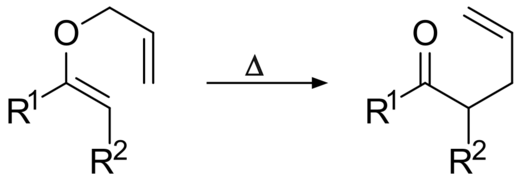
A named reaction is a well-characterized transformation credited to the chemist who first reported it—examples include the Diels-Alder cycloaddition, the Suzuki cross-coupling, and the Claisen rearrangement. They exist because certain mechanistic patterns recur so frequently across the literature that a two-word shorthand replaces an entire paragraph of arrow-pushing, making communication between chemists far more efficient.